
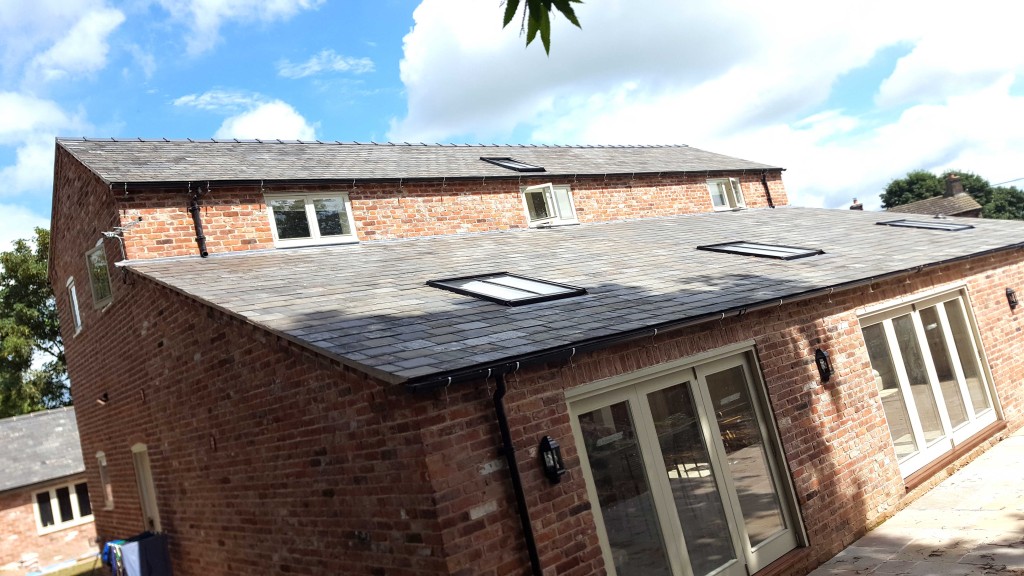
In England, Class Q permitted development rights allow certain agricultural buildings to be converted into homes without requiring full planning permission, provided the proposal satisfies the qualifying criteria. Instead, the development is assessed through a prior approval process.
The building must be an agricultural building on an established agricultural unit. It must meet the use and timing requirements set out in the legislation (including historic agricultural use criteria).
The building must be structurally capable of conversion. Class Q is intended for conversion, not wholesale rebuilding.
Reasonably necessary works to convert the building into a dwelling are permitted, including:
-
Installing or replacing windows and doors.
-
Replacing roofs or external walls where reasonably necessary.
-
Installing utilities such as water, drainage, electricity and gas.
-
Partial demolition where needed to facilitate the conversion.
-
Prior approval matters
The current Class Q rules in England (in force since 21 May 2024) increased the overall amount of development allowed but reduced the maximum size of each individual dwelling.
The main size restrictions are:
-
Maximum number of dwellings 10
-
Maximum cumulative floorspace converted 1,000 m²
-
Maximum size of any one dwelling 150 m² (gross internal floor area)
-
Rear extension can be added and up to 4 m deep, single storey, subject to the Class Q conditions
-
Curtilage Limited to the area reasonably necessary for the dwelling and generally no larger than the footprint of the building (subject to the regulations and prior approval).
What changed from the old rules?
Before 21 May 2024, Class Q allowed:
-
Up to 5 dwellings
-
Up to 865 m² total floorspace
-
Individual dwellings could be much larger (up to 465 m² under the previous larger dwelling provisions).
Can you build extensions?
Under the amended Class Q:
-
A single-storey rear extension is permitted.
-
It can project up to 4 metres beyond the existing rear wall.
-
It must meet the specific Class Q conditions, including being on qualifying hardstanding.
Can you enlarge the building?
Generally, no. Class Q is still intended to be a conversion, not a new-build. Apart from the permitted rear extension and small allowances for construction tolerances (such as minor wall thickness increases), the external dimensions of the existing building cannot be materially enlarged. If the proposal amounts to rebuilding rather than converting, it is unlikely to qualify under Class Q.
The local planning authority can consider issues such as:
-
Transport and highway impacts.
-
Noise.
-
Contamination and flood risk.
-
Design and external appearance (where relevant).
-
Natural light within the proposed dwelling.
-
Other specified matters under the legislation.
-
Common limitations
Class Q will not apply where:
-
The building has been used for a non-agricultural purpose in a way that disqualifies it.
-
Certain agricultural permitted development rights have already been exercised on the unit within the relevant qualifying period.
-
The proposal amounts to rebuilding rather than conversion.
-
The site or building fails one of the statutory conditions or limitations.
Before purchasing or designing a Class Q project, it is usually advisable to:
-
Obtain a structural assessment confirming the building is capable of conversion.
-
Check the planning history for the agricultural unit.
-
Confirm that the building satisfies the agricultural use requirements.
-
Prepare a robust prior approval application with supporting plans and reports where needed.
If you’re look to work on a specific barn or farm building, and want to know more, get in touch and we’ll happily advise you.